
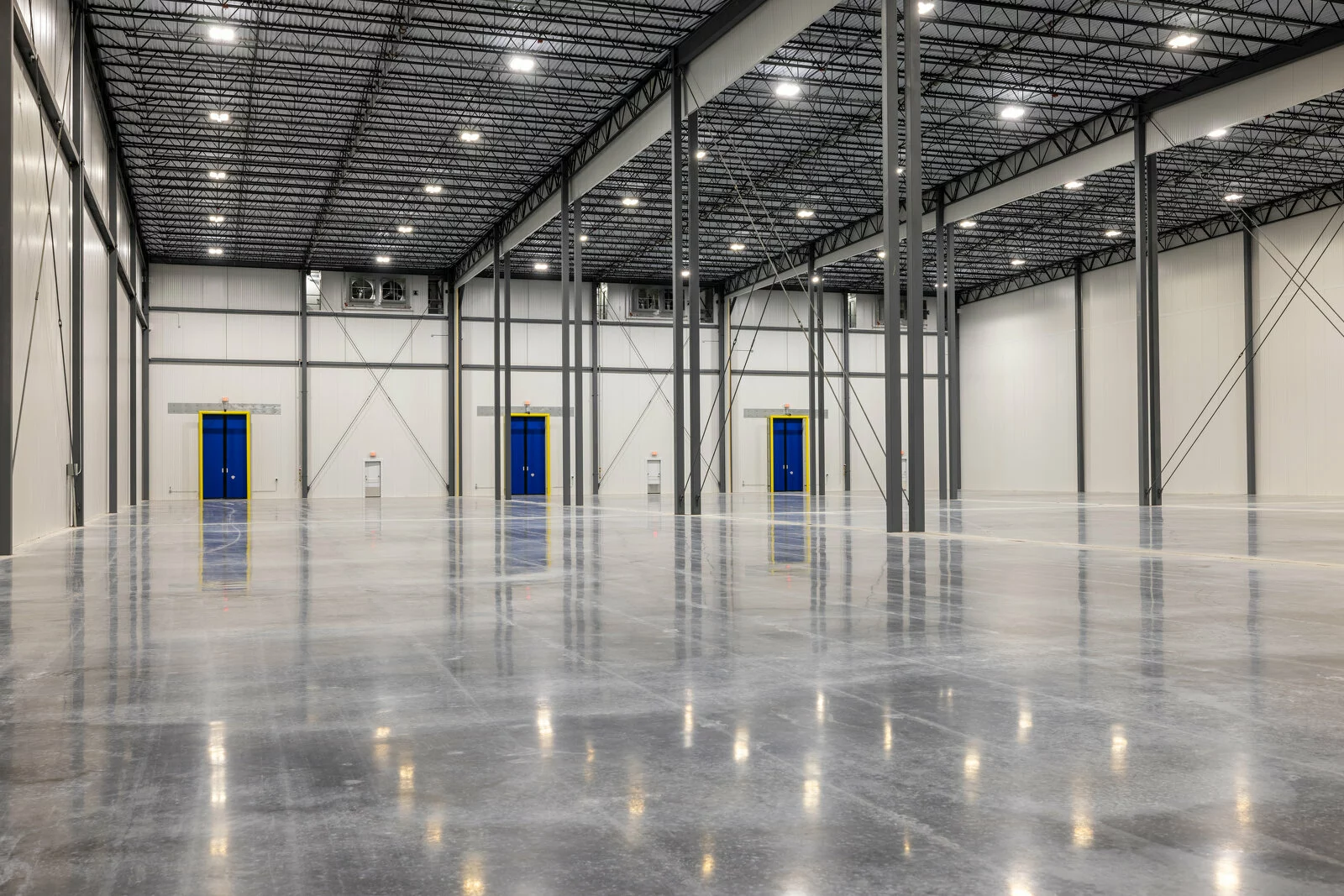
The importance of proper roofing in maintaining temperature control
How does the roof on a large-scale commercial cold storage facility compare to that of a similarly-sized dry storage warehouse? Today, FCL Builders will discuss the essential components of a commercial cold storage roof, the impact of local climate on roof load, and the role the roof plays in the cold storage thermal envelope.
Commercial cold storage warehouses and facilities serve a single purpose: to keep temperature-sensitive products at a desired temperature; typically cool, cold, frozen, or subzero. Achieving this goal, however, requires a lot of complex structural systems to work in harmony, year-round, often in a variety of weather conditions. In this article, FCL’s experts explain the roles roof design, composition, and construction play in creating a cold storage facility that operates safely, efficiently, and at high-performance throughout its lifetime.
Roofing protects the structural integrity of the entire building while helping cooling systems keep moisture out and temperature-controlled air in. Large-scale commercial cold storage buildings often have thousands of square feet of low-slope roofing, which can present significant structural challenges that vary by season. What works in one type of facility in one region may not be the optimal choice in another. The roofing systems deployed will depend on where the facility is located and how it will be used.
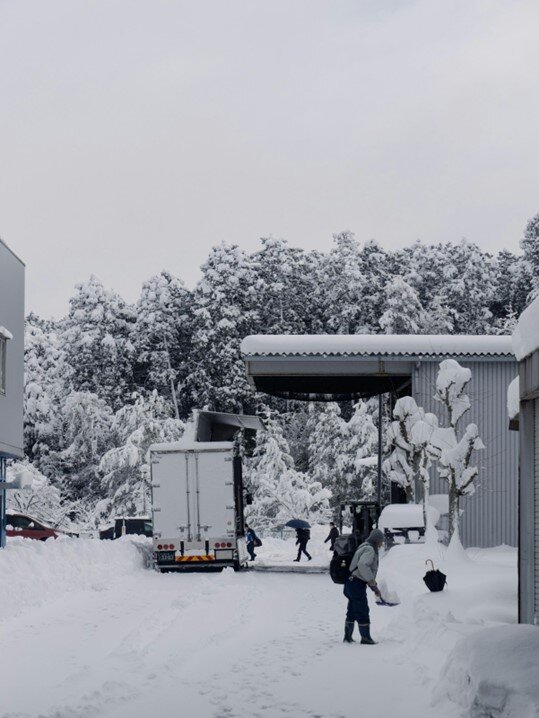
FCL has built cold-storage facilities across the country. Each new cold storage project comes with its own set of challenges to address and solve. Southern and western states tend to stay warmer year-round; often, punishing summertime heat can add additional pressure to the facility to remain cool. Spring and Fall often include extreme weather events, calling upon roofs to hold up to high winds, rain deluge, and projectiles. In northern regions, winters often bring heavy snow and ice, the weight of which must be effectively managed; these roofing systems must help maintenance crews prevent ice dams or drainage blockages as much as possible. And year-round, cold storage roofs must hold the weight of HVAC compressors and other equipment.
As the temperature inside the cold storage facility remains constant, roofing design and material will help achieve balance as outside conditions change. When the temperature is warmer outside the facility, vapor from the moisture-filled outside air flows inward. By placing vapor retardant material on the outside of the roofing insulation, most of that moisture remains outside the structure. This strategy prevents the formation of internal condensation, which can lead to frost and ice inside cooling chambers.
When it’s colder outside the facility, vapor naturally flows outward. For these facilities, placing a vapor barrier underneath insulation can keep the desired internal temperature and humidity levels constant.
Budget and climate will play the largest roles in selecting the composite materials for a cold storage facility roof, but other factors come into play as well. For mixed-use facilities, where cold storage is adjacent to food processing or manufacturing processes, grease and oil buildup near rooftop ventilation can cause certain materials to decompose prematurely. Storm damage or excessive worker foot traffic on the roof can also cause roofing materials, adhesives, and fasteners to fail.
With all of the above factors under consideration, these types of roofing will most likely be deployed:
These composites are typically installed on the top surface of the roof, over the core roof deck, an insulation layer, and a cover board.
TPO (Thermoplastic Polyolefin) is a relatively new composite, providing an affordable alternative to other roofing materials. It can be adhered to the cover board via mechanical fasteners, adhesive, or welding. While TPO is offered in many colors, white performs the best in terms of reflectivity to offset UV rays, especially in warmer climates. Lifespan is estimated, since the product is so new, but most estimates for a well-maintained TPO roof are up to 25 years.
Ethylene Propylene Diene Monomer (EPDM) is a rubberized product, typically black in color. It fares best in colder climates in terms of keeping heat in and holding up to heavy ice and snow loads. It also has a longer projected lifespan, up to 30 years.
Polyvinyl Chloride (PVC): like TPO, PVC comes in white, grey, and tan, and it’s proven to hold up better to grease and chemical exposure, making it more popular in foodservice cold storage and mixed-use applications.
Bright white TPO, EPDM, and PVC cold storage roofing materials will deliver the highest possible Solar Reflectance Index (SRI). SRI calculates both heat reflected as the sun beats down on the roof, along with heat emitted as the building’s thermal envelope keeps refrigerated air in and expels excess heat and moisture.
Metal Roofing: Cold storage facilities with Insulated Metal Panel (IMP) walls are often paired with insulated metal roofs as part of a cohesive insulation and vapor barrier strategy. Metal roofs perform exceptionally well in terms of snow and ice load, and a well-maintained system can last up to 60 years.
Spray Polyurethane Foam (SPF) is very popular in climates where water ponding is common along large, flat surfaces. Seamless application provides ultimate water protection and insulation R-value. It can also be applied on top of existing surfaces.
In commercial cold storage applications, even a hairline crack can cause significant energy loss, which in turn can affect operational efficiency and the integrity of products the facility was designed to protect. Therefore, attention to detail is critical in both the construction and operation of these facilities.
During the construction phase, experienced builders who have experience in cold storage construction know how to properly schedule trades and supply orders, so that construction integrity isn’t lost as workers rush to meet tight deadlines. Precise designs, expertly installed, and thoroughly inspected before moving onto the next step, is the critical sequence that the project timeline must follow.
Once a facility is operational, maintenance and inspections are key to keeping a cold storage facility running at optimum efficiency. Facility owners should ensure a schedule of continual monitoring of roof conditions. Early signs of building envelope failure include frost/ice on the underside of the deck, condensation on interior surfaces, and/or increased utility costs.
“Roofing is one of the most critical systems in a cold storage facility—it protects temperature integrity, energy efficiency, and the long-term performance of the entire operation. A properly designed and installed roof isn’t just about keeping the weather out; it’s about preventing condensation, minimizing thermal loss, and safeguarding the investment inside the building, day in and day out.” -Greg Camp, Vice President of Project Development, National Cold Storage for FCL Builders
Any seam, joint, fitting, or other connection and transition point can lead to air leakage, moisture entry, or undesired heat transfer. Symptoms include interior or exterior condensation, ponding, ice buildup, frost, or even rain inside the structure.
Heat is constantly on the lookout for points of escape, so thermal bridging is when heat sneaks around the main insulation layer by traveling through conductive materials like metal fasteners or framework. Builders prevent this by installing multiple, staggered layers of insulation and, when called for, using specialty adhesives to create a fully adhered roof system where the roofing membrane is securely glued to the insulation or decking.
R-value stands for “resistance” and represents an insulation system’s ability to prevent heat transfer. Cold storage R-values vary based on the specific interior temperature (cooler vs. freezer versus deep freezer) and the exterior climate. Commercial cold storage roofs typically mandate the highest level of protection, R-50 or more.