
Kyle Holbrook, Regional Vice President, FCL Southeast
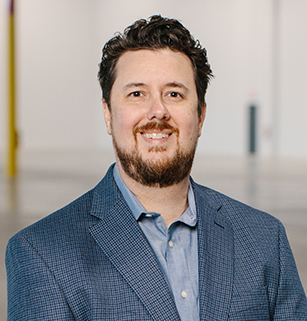
I recently had the pleasure of speaking on a panel at Bisnow Industrial Southeast Summit in Atlanta, joining developer colleagues from Prologis, Portman Holdings, and Stonemont Financial Group for a discussion titled “Asset Management, Building Upgrades & Filling Existing Vacancy”.
I was honored to contribute the building partner perspective when discussing how new developments, retrofits, and tenant improvement projects are planned, budgeted, and built. We covered a lot of bases in the time allowed, and many of these conversations continued offline throughout the event.
With project profitability and sustainable ROI as the end goal for development projects, the hot topic became how to get there. First and foremost, understanding tenant needs, today and down the line. How can we best deliver what facility operators need to be successful now, empowering them to steadily grow without having to move? Achieving this goal helps developers reduce vacancies with long-term leases.
To be proactive with solutions, we must tune into economic shifts with current market analysis and informed projections for the short term, the next 5 years, and long term – mapping possibilities decades into the future.
We also discussed the roles expert construction counsel and modeling software can play in decision-making, to best ensure high performance and long-term profitability for each facility. As a full-service design-builder, FCL provides value to both developers and end users (facility tenants and site operators) from the earliest planning discussions, through site selection, design and material specifications, all the way to construction and tenant occupancy.
So, what’s driving development in the southeast as we close out 2025 and barrel into the next?
Food and Beverage, Grocery Supply Chain, and Light Manufacturing remain strong growth verticals in terms of new construction, retrofits, and tenant improvements. These deals are especially strong in Central Florida, Nashville and Raleigh Durham where inventory is low. Atlanta and Savannah built a robust inventory, so development may ebb there until vacancies fill. Automotive facility construction – both manufacturing and assembly – is slowing down. Economic variables are affecting EV demand which may impact facilities in the region from Louisiana to Georgia.
Power concerns are top of mind for every development project, which will affect site selection, construction, long-term operational efficiency, performance, and profitability. Cold Storage facilities and Data Centers draw more power from the grid than traditional warehouse and distribution facilities, so power infrastructure planning is key, often combining on-site power generation along with grid connections.
Solar is becoming an increasingly desirable option, adding enough extra watts to lower draw from the grid. Even if customers are not ready for solar now, it is becoming more common to build contingencies into the roof design to handle the extra load should panels be added down the line.
While major retailers are still building facilities north of 1MM square feet, the more common project size in the southeast are 100-300K sq ft facilities. Instead of single use, they often deploy “box in a box” designs to offer operators plenty of room for dry, cold and frozen storage. These types of facilities may not generate big headlines when built and opened, but they can generate steady revenues and profits while serving as central elements of the regional supply chain.
As we look at the southeast market in 2026 and beyond, these types of facilities will be built from the ground up or modified from the sales of properties. In many cases, existing buildings with great bones are centrally located and ripe for redevelopment.
Our job as a building partner is to help clients make well-informed decisions at every turn. We apply decades of experience in building material sourcing and performance with modern technology like Building Information Modeling, to ensure every one of the thousands of building materials installed in a project delivers the best overall value across the lifetime of a building.
Sometimes a seemingly inconsequential product selection, one made to bring down construction costs, can have monumental impact to site performance and safety downstream, resulting in costly closures and repairs. We also monitor supply chain markets to ensure the products we order get the best possible pricing and arrive on time to the site.
So that’s the Southeast Market analysis for 2026 – as it stands today. Market shifts will certainly happen, and we’ll be well prepared to anticipate changes with proactive and reactive strategies at the ready to best serve our customers.